Weather Impact on Baseball Bets: Wind & Temperature ROI Data
 Available in US
Calculating the Impact of Wind and Humidity on MLB Run Totals
Three years ago I started logging wind direction for every MLB totals bet I placed. By the end of that first season, the data was so clear I felt foolish for not tracking it sooner. Games played with sustained wind blowing toward the outfield produced overs at a noticeably higher rate than the league average, and games with wind blowing in suppressed scoring in a way that the market consistently underpriced. The numbers were not marginal – they were actionable.
Weather is the variable that separates sharp totals bettors from everyone else in baseball. Pitching matchups get scrutinized. Park factors get mentioned. But wind data, temperature readings, and humidity levels – the atmospheric conditions that physically alter how a baseball travels – barely register for most recreational bettors. That creates a persistent inefficiency in the totals market, one that has held up over thousands of games.
The reason weather matters so much in baseball specifically is physics. A baseball hit at 100 mph exit velocity travels meaningfully farther in hot, humid air with wind behind it than in cold, dry air with wind opposing it. The difference can be 15 to 30 feet on a fly ball – enough to turn a warning-track out into a home run or a home run into a routine catch. When you multiply that effect across 60 to 80 balls put in play per game, the cumulative impact on run scoring is substantial. I check weather data before placing any MLB totals pick, and the numbers consistently reward the effort.
Wind Blowing In: The Under Angle (55.1% Win Rate)
I remember a mid-August series at Wrigley where the wind was howling in from left field at 12 mph. The total was set at 8.5. Every sharp I follow was on the under, and the game ended 2-1. That is an extreme example, but the trend is real and well-documented across massive sample sizes.
When wind blows toward the playing field at 5 mph or more, under bets have hit at a 55.1% rate across a dataset of over 1,800 games, producing a 6.4% ROI. That is not a marginal edge – it is one of the most reliable single-factor angles in all of sports betting. The mechanism is simple: headwind knocks down fly balls that would otherwise carry for extra-base hits or home runs. Scoring drops, and the market does not fully adjust.
Why doesn’t the market price this in completely? A few reasons. Sportsbooks set opening totals based primarily on pitcher matchups, team offensive rankings, and park factor baselines. Wind conditions are variable – they can shift between the time lines are set and first pitch. Many books adjust totals slightly when extreme wind is forecast, but the adjustment rarely matches the full statistical impact. The gap between the partial adjustment and the real impact is where the edge lives.
I apply this angle selectively. Not every wind-blowing-in game is an automatic under play. The strongest spots combine headwind with two above-average starting pitchers, because the wind effect amplifies what good pitching already does – suppress hard contact. If a game features two back-end starters with high fly-ball rates, the wind-in angle weakens because those pitchers already allow enough hard contact to produce runs through other means. I also weight wind speed: 5-8 mph in is good, 10+ mph in is excellent. Below 5 mph, the effect is negligible.
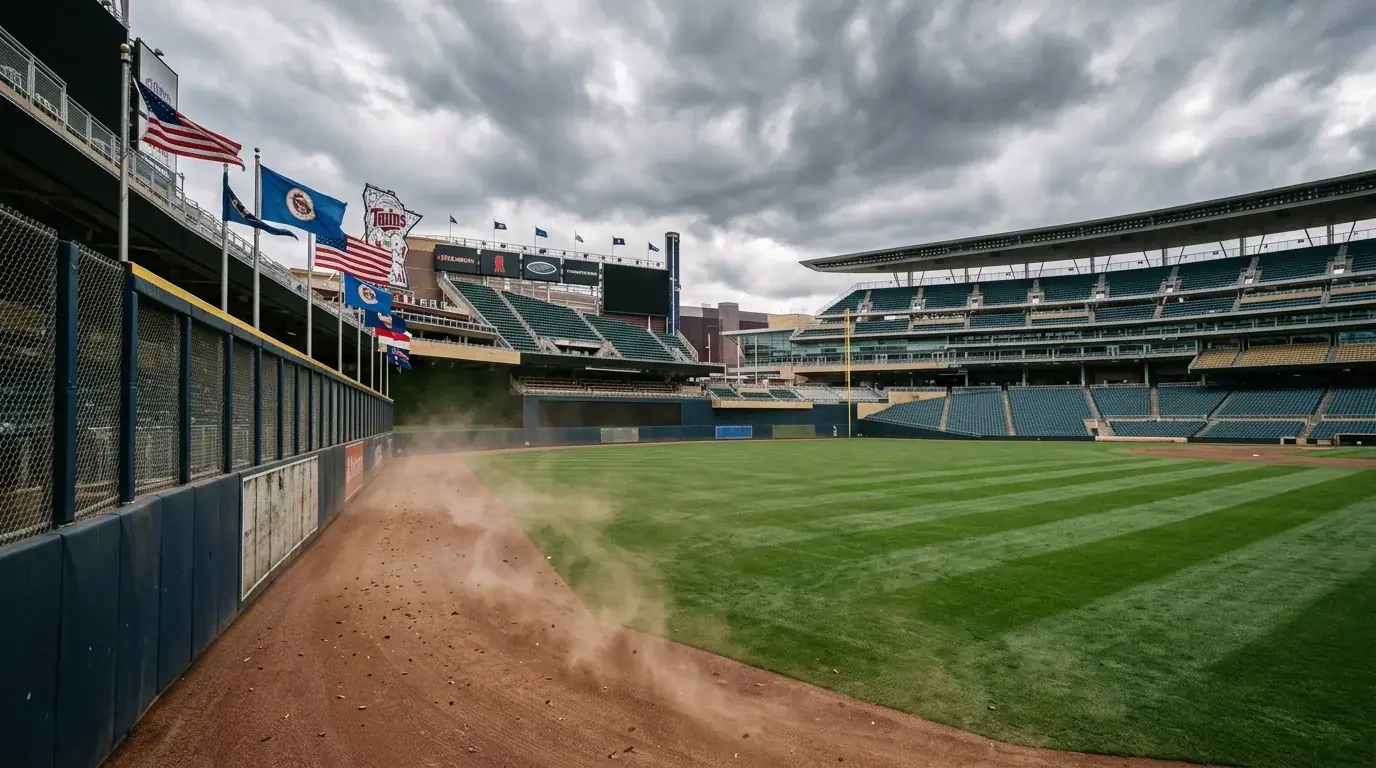
One more nuance: this angle works best at open-air ballparks where wind actually reaches the playing field. Domed stadiums and retractable roofs eliminate the variable entirely. Stadiums like Wrigley, Kauffman, and Fenway – where wind patterns are well-documented and often strong – produce the cleanest data.
Wind Blowing Out: The Over Angle (52.9% Win Rate)
The flip side of the wind-in under angle is the wind-out over angle, but the numbers are softer. When wind blows out from the playing field at 8 mph or more, overs have connected at a 52.9% rate across more than 2,300 games, producing a 3.6% ROI. Still profitable over a large sample, but roughly half the edge of the under angle.
The asymmetry makes intuitive sense. Wind blowing out helps offense by carrying fly balls farther, but it also helps pitchers by drying out the ball and making breaking pitches move more. The net effect favors offense, but not as dramatically as headwind favors defense. I treat the wind-out over angle as a supplementary factor rather than a standalone play. If other indicators – hitter-friendly park, two below-average starters, hot temperature – already point to the over, wind blowing out at 8+ mph becomes the confirmation that pushes me from lean to bet.
The speed threshold matters here. At 5-7 mph blowing out, the effect is minimal and not worth factoring. At 8-12 mph, it becomes meaningful. Above 15 mph, conditions get unusual enough that pitcher control issues and game flow disruptions can muddy the data. I stick to the 8-15 mph range for this angle.
Stacking wind-out with park factor data is where this angle becomes strongest. Wind blowing out at Coors Field or Great American Ball Park – venues that already play as hitter-friendly – creates an extreme offensive environment that the market underprices more reliably than wind-out at a neutral park.
Temperature and Humidity as Secondary Factors
Wind gets the headline, but temperature and humidity are supporting characters that compound the effect. Here is how they fit into my pre-bet weather check without overcomplicating the process.
Temperature affects ball flight directly. A baseball hit at 100 mph exit velocity travels roughly four feet farther for every 10-degree increase in ambient temperature. The air is less dense in heat, offering less resistance. Games played above 85 degrees Fahrenheit see measurably higher scoring than games below 65 degrees. I do not bet temperature alone – the effect is too small on a per-game basis to create standalone value. But when temperature is extreme in either direction, I adjust my lean on totals by half a run mentally. A game I would pass on at a total of 8.5 might become an over play at the same total if game-time temperature is forecast at 95 degrees.
Humidity is the most misunderstood weather variable in baseball betting. The common belief is that humid air is “heavier” and suppresses ball flight. The physics say the opposite. Water vapor is lighter than the nitrogen and oxygen it displaces in air, so humid air is actually less dense than dry air. Balls travel slightly farther in humid conditions. The effect is small – maybe a foot or two on a deep fly ball – but it directionally favors offense. I use humidity as a tiebreaker rather than a primary factor.
Altitude deserves mention alongside weather because it operates through the same physics. Denver sits at 5,280 feet, where the air is roughly 20% less dense than at sea level. That is the equivalent of adding a permanent tailwind to every batted ball. Coors Field’s extreme park factor is really an altitude factor dressed up as a park number. When high altitude combines with heat and wind blowing out, the offensive environment reaches levels that even sharp bettors sometimes underestimate.
My practical approach: I check wind first, temperature second, humidity third. Wind determines whether I have an edge. Temperature adjusts the size of that edge. Humidity rarely changes a decision but occasionally tips a close call. The entire weather check takes under two minutes using free sites that publish hourly forecasts by stadium location. That two-minute investment has been the single highest-ROI habit I have added to my betting process.
Where can I check real-time wind data for MLB stadiums?
Several free weather services provide hourly forecasts that you can cross-reference with stadium locations. I use standard weather apps and search for the stadium’s zip code, then check wind speed, direction, and gusts for the expected first-pitch time. Some betting analytics platforms also aggregate weather data specifically for MLB games and display it alongside the line.
Does weather matter more in open-air or retractable-roof stadiums?
Open-air stadiums are the only venues where weather angles apply fully. Retractable-roof stadiums depend on whether the roof is open or closed – check game-day status before betting. Fully domed stadiums eliminate weather as a variable entirely. The strongest weather edges consistently appear at classic open-air parks like Wrigley Field, Kauffman Stadium, and Fenway Park.
Created by the "Baseball Bets of the day" editorial team.