MLB Prediction Markets vs. Sportsbooks: Event Contracts
 Available in US

Evaluating Margin Differences Between Exchanges and Sportsbooks
A friend of mine placed his first baseball bet last season not through a sportsbook but through a prediction market. He bought “yes” contracts on whether the Dodgers would make the NLCS, priced at 42 cents each, and sold them at 78 cents three months later as the team surged. He never placed a traditional bet, never dealt with moneyline math, and still made a 85% return on his position. Prediction markets handled over $40 billion in wagers in 2025, and their competition with traditional sportsbooks is reshaping how Americans bet on baseball.
The emergence of event contract platforms has created a parallel universe for sports wagering. Instead of traditional odds and vig, these platforms use a binary contract model where you buy shares at prices between one cent and 99 cents, with each share paying out $1 if the outcome occurs. It is a fundamentally different product from what sportsbooks offer, and the differences create both opportunities and complications for baseball bettors who are willing to operate across both ecosystems.
Event Contracts vs. Traditional Odds: Core Differences
The structural differences between prediction markets and sportsbooks go deeper than the pricing format. Prediction markets processed over $40 billion in volume in 2025 while also creating an estimated $500 million gap in tax revenue that traditional sportsbooks would have generated. Understanding these differences helps you decide which platform suits your betting style.
In a traditional sportsbook, you bet against the house. The sportsbook sets the odds, takes the other side, and profits from the vig. In a prediction market, you trade against other users. The platform matches buyers and sellers, takes a small transaction fee, and the price is set by supply and demand rather than by an oddsmaker. This peer-to-peer structure means that prediction market prices are driven purely by market consensus rather than by a sportsbook’s risk management strategy.
The contract model also allows position management that sportsbooks do not. You can buy a contract at 35 cents and sell it at 55 cents without waiting for the event to resolve – locking in a 57% return before the outcome is known. In sportsbook betting, your position is locked until the game ends (unless the book offers a cash-out feature, which always includes a margin). This liquidity gives prediction markets a trading-like character that appeals to bettors with financial market experience.
The downside: prediction markets currently offer far fewer baseball markets than sportsbooks. While a major sportsbook might offer 50+ betting options per MLB game (moneyline, runline, total, dozens of props), prediction markets typically offer only high-level outcomes – game winner, series winner, season-level futures. The granularity that props bettors rely on does not exist in the prediction market format, at least not yet.
Price Discrepancies Between Markets and Books
The most interesting aspect of the dual-ecosystem landscape is that prediction market prices and sportsbook odds sometimes disagree on the same outcome. When a sportsbook has a team at -150 (implying 60% probability) and a prediction market has the same team’s contract priced at 55 cents (implying 55% probability), someone is wrong – and the gap is theoretically exploitable.
These discrepancies arise because the two markets are fed by different pools of money. Sportsbook lines reflect both public and sharp action from dedicated sports bettors. Prediction market prices reflect a broader participant base that includes political market traders, financial speculators, and casual users who may not have deep sports expertise. The different participant pools can produce different assessments of the same probability, creating cross-market arbitrage opportunities.
I have experimented with monitoring both markets simultaneously for baseball futures. The discrepancies are most frequent on season-long outcomes – division winners, pennant races, MVP markets – where prediction market liquidity is thin enough for prices to deviate meaningfully from sportsbook consensus. On game-level outcomes, the discrepancies are smaller because both markets converge on the same public information within hours of game time. The practical takeaway: if you trade in both worlds, check both before committing capital on futures plays. The best price may be on the platform you did not check first, and the arbitrage opportunity connects naturally to the broader daily analysis framework.
The Regulatory Battle and Missing Tax Revenue
Brian O’Dwyer, Chair of the New York State Gaming Commission, has stated that if a wager is susceptible to manipulation, the appropriate response is elimination rather than restriction. That philosophy extends to the regulatory tension between prediction markets and traditional sportsbooks, where the central dispute is about classification: are event contracts financial instruments or gambling products?
Prediction markets argue they are regulated financial products – derivatives, essentially – overseen by the CFTC (Commodity Futures Trading Commission) rather than state gaming commissions. Traditional sportsbooks argue that event contracts on sporting events are gambling products that should be subject to the same state-level regulation, taxation, and licensing requirements. The distinction is not academic: prediction markets diverted an estimated $500 million in potential tax revenue from traditional sports betting channels in the past year.
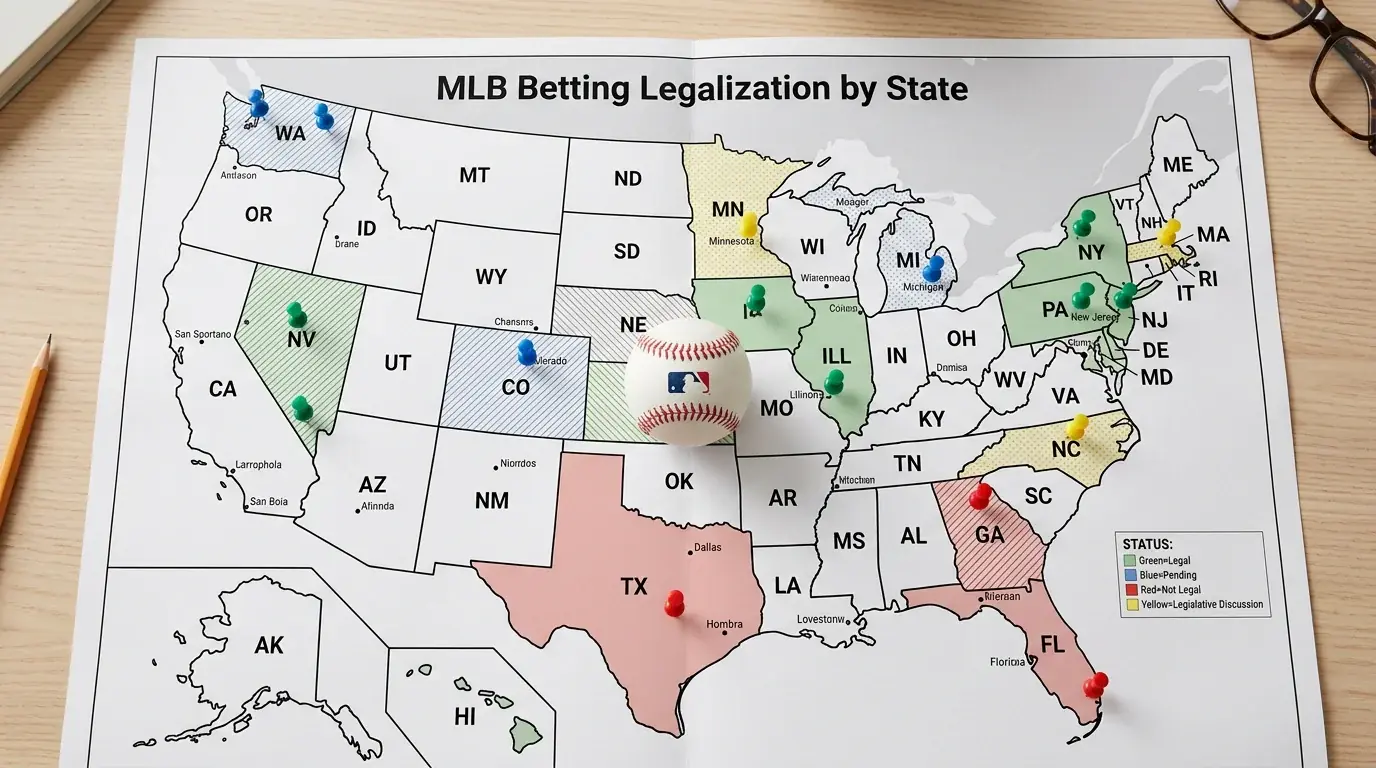
For bettors, the regulatory outcome will shape future access. If prediction markets maintain their current status, they will continue expanding baseball offerings – potentially adding game-level and player-level contracts that compete directly with sportsbook props. If regulators reclassify them as gambling products, they will face the same state-by-state legalization patchwork that traditional sportsbooks navigate. Either way, the competitive pressure between the two ecosystems is likely to benefit consumers through better pricing, broader market availability, and innovation in betting products. The market size data suggests the industry is growing fast enough to support both ecosystems simultaneously.
Can I use prediction markets to bet on individual MLB games?
Currently, prediction market offerings for individual MLB games are limited. Most platforms focus on season-level outcomes like division winners, pennant races, and World Series champions. Some platforms have begun experimenting with game-level contracts, but the liquidity and market depth are far below what traditional sportsbooks offer. For daily game-by-game betting, traditional sportsbooks remain the primary option.
Are prediction market payouts taxed differently than sportsbook winnings?
The tax treatment depends on how regulators classify the platform. Gains from CFTC-regulated event contracts may be treated as capital gains (similar to trading profits), while sportsbook winnings are taxed as gambling income. The distinction can affect your tax rate and reporting requirements. Consult a tax professional for guidance specific to your situation, as the regulatory landscape is evolving and rules may differ by state.
Created by the "Baseball Bets of the day" editorial team.